

Not every NBA team gives all its starters a run in the preseason (The Philadelphia 76ers just sat out LeBron James, Tyrese Maxey, and Joel Embiid from their preseason opener). Even if they do, they may have a short leash.
During the preseason, the Minnesota Timberwolves won’t give their starters as many minutes as they will during the regular season. They still saw a good amount of time together in Monday’s preseason opener, despite all of them sitting out the second half.
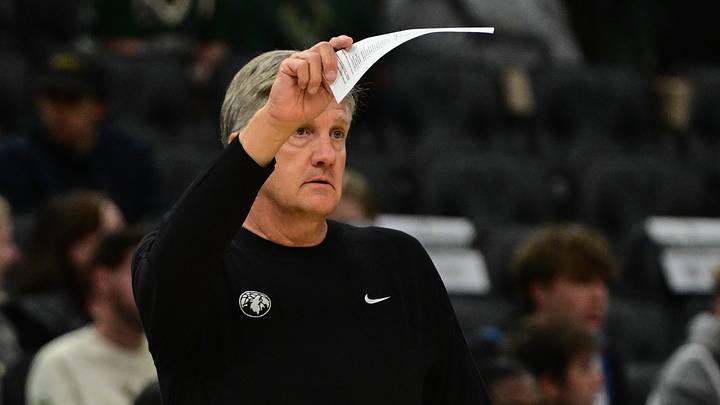
With two new starters in LaMelo Ball and Jonathan Kuminga, and given the team’s history of slow starts in recent years, head coach Chris Finch is making the right call by letting his starters get some time together to ramp up before the regular season. It can pay dividends for their end-of-season record.
Meaningful time together for the starters
On Monday, the Timberwolves defeated the rebuilding Milwaukee Bucks 116–97. The five starters—Anthony Edwards, Jaden McDaniels, Rudy Gobert, Ball, and Kuminga—all played 14-18 minutes.
The starters played together for the first 6:43 of the first quarter before Finch made three substitutions, with Minnesota leading 19–12. All five starters weren’t on the floor together in the second quarter, but three or four of them often were.
It’s important to allow the new starting five to receive plenty of reps before the regular season. That’s doubly true because the Timberwolves have gotten off to somewhat slow starts in recent years.
Last season, the Wolves went 10–8 after 18 games. They were 4–4 after their first eight games, with their four losses coming against some of the league’s top teams (twice to the Los Angeles Lakers, once to the Denver Nuggets, and New York Knicks).
The year before that, the Timberwolves took half a season to really get the ball rolling. After 43 games, they were barely over .500 at 22–21. The 2024-25 team needed to integrate newcomers Julius Randle and Donte DiVincenzo, and the second-half surge only got them to rise to sixth in the Western Conference.
This season, the Timberwolves’ schedule is front-loaded with home games. Twelve of their first 18 regular-season contests will be at the Target Center. That makes it important for the Timberwolves to get off to a fast start with so much home cooking.
Minnesota doesn’t want the excuse that they need time to gel. A subpar start could affect their playoff seeding. With four preseason games remaining, it will be interesting to see how much more Chris Finch lets his starting lineup play together.
 Add us as a preferred source on Google