

There's no sugarcoating things; it was an awful performance for the Minnesota Timberwolves on Tuesday night. They lost 120-106 to the Los Angeles on the heels of an embarrassing loss to the Orlando Magic this past weekend.
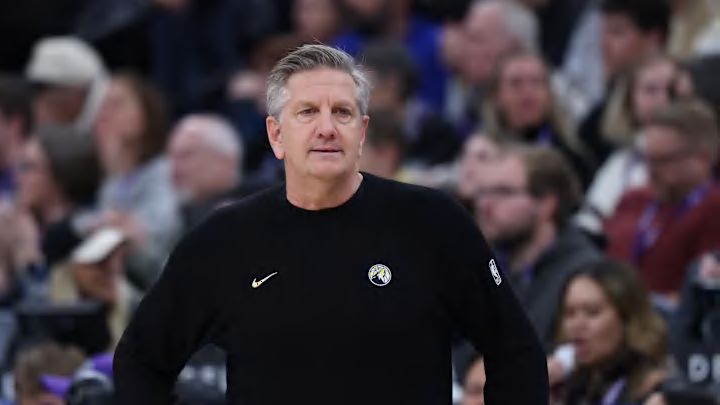
Chris Finch didn't mince his words when discussing the Wolves' offensive process on Tuesday.
"We just kind of fell into a lot of iso basketball, and everything was a beat late. We're very out of rhythm offensively, and we have to fix that," Finch said. "I think what happens is everyone tries to get themselves going, so it kinda of snowballs on them. You saw that tonight."
The Wolves' offense was truly awful; they just made 25 percent from 3-point range. Anthony Edwards and Julius Randle tied for a team high with 14 points, Ant shot 2-for-15, though. Perhaps more concerningly, to Finch's point, there was limited ball movement and structure, which led to what looked like a selfish brand of basketball.
The Timberwolves' offensive approach needs to improve
This lack of ball movement and cold shooting in back-to-back games is a concerning sign as the playoffs roll around.
The Wolves have lacked any semblance of structure, especially in these past two games. Oftentimes, when the Wolves' offense gets cold, they double down on isolation ball, which compounds their problems. Notably, the Wolves are tied for third in isolation frequency. At face value, you could blame Finch for some of these problems -- I certainly have advocated for him to implement more structure.
However, after the game, Julius Randle, Rudy Gobert, and Donte DiVincenzo all admitted that they needed to execute the game plan better. Say what you will about Finch, but he's not an idiot. When he sees the Wolves' offense drying up, there's no chance that he says "great job guys, let's keep isoing." At some point, it's on the players to go out and make plays.
Furthermore, many Wolves players have admitted that they don't listen to the game plan enough.
Now, if you want to argue, this highlights a disconnect between Finch and the players, I think there could be an argument there. Still, DiVincenzo said these problems come down to the Wolves, thinking that they can get away with beating teams off talent. This sense of arrogance is something you can see from the Wolves when watching from your couch.
Another problem is that the Wolves' two best players are isolation-heavy, which is a clear blessing and a curse. Not having a natural playmaker to organize the offense is still hurting the Wolves -- I was wrong about that no longer being a problem.
Once the playoffs roll around, game plan discipline becomes more prevalent. The Wolves' offense simply can't remain so stagnant. Cold shooting nights are natural, but the Wolves need to lean into their structure and not double down on the style of play that got them into a hole.
In my eyes, it's on the team's best two players and primary initiators (Edwards and Randle) to help the Wolves diversify their offense.
 Add us as a preferred source on Google