

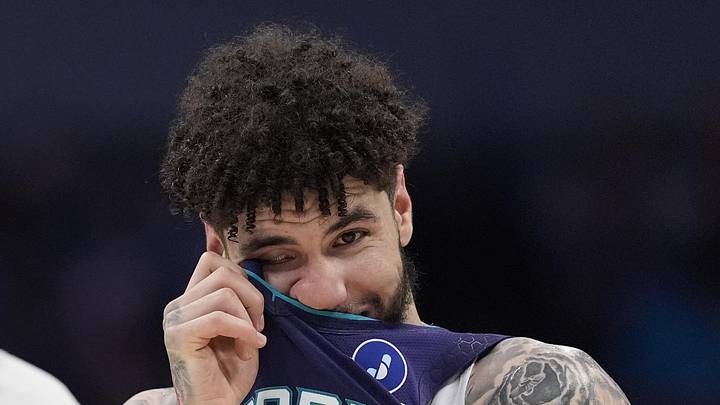
Most of the criticism I've seen around the Minnesota Timberwolves trading for LaMelo Ball is that he isn't a winning basketball player and his lengthy injury history makes him a risky addition. The first criticism doesn't totally add up, as this is the best roster context he's ever had, and last year showed that he can thrive in a somewhat scaled-down role.
Still, even as someone who likes the trade, his injury history is a legitimate concern, as he's played in 60-plus games just twice in his six-year career. This is connected to another major concern: how will LaMelo handle the physicality of the playoffs?
The ultimate goal of this move was to bring a championship to Minnesota, and LaMelo's ability to adjust to postseason basketball is a concern, even if he continues to refine his shot selection and basketball IQ.
It's unclear how LaMelo Ball will adjust to the physicality of the playoffs
Despite being 6-foot-7, Ball weighs just 180 pounds. It's possible that his frame has contributed to injury history. In any event, his thin frame led former head coach Charles Lee to say that Ball must get stronger. In the playoffs, teams ramp up the physicality level, and it's fair to wonder how LaMelo will adjust to this style.
This is especially a valid concern against top-tier physical defenses like the San Antonio Spurs and Oklahoma City Thunder.
The NBA is trending toward physicality, and few players of LaMelo's size are positive playoff contributors. Even smaller guards such as Jalen Brunson and Steph Curry weigh more than Ball. And since we've never seen Ball in a playoff setting to this point, this is a major concern.
Maybe it goes great, and Ball is talented enough to negate this physicality, but it's a legitimate question.
Another thing that's connected to his injury history and ability to handle physicality is his minutes. Ball averaged 28 minutes per game last season; in part, this lower-minutes role was to limit the risk of injury. Having your second-best player average fewer than 30 minutes a game isn't going to cut it in the playoffs.
But can Ball handle a scaled-up minutes role in the playoffs with the increased physicality? He's a totally different player, but Victor Wembanyama averaged below 30 regular season minutes, and in playoff games, fatigue was a clear issue as his minutes per game increased.
None of this changes my stance on the trade. The Timberwolves needed a lead guard alongside Anthony Edwards, and they couldn't find a more talented one than Ball, particularly for the price.
There's a chance that trading for Ball eventually helps them win a championship. He certainly increases their chances of competing, at the very least.
Regardless, trading for Ball isn't a risk-free move, and to me, the biggest element of risk centers around how an injury-prone player will handle a high-level of physicality in the playoffs.
 Add us as a preferred source on Google