

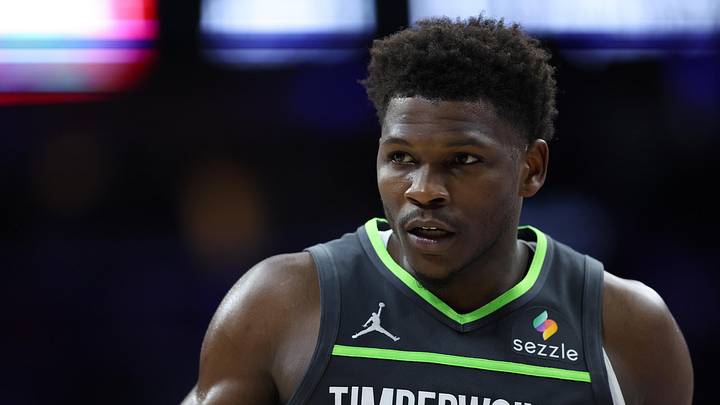
While there have been signs that this issue has improved, the Minnesota Timberwolves have long struggled with ball pressure and taking care of the rock. Unfortunately, the San Antonio Spurs exposed this weakness in Game 2. Committing 22 turnovers was central to the Wolves' 133-95 loss, and the Spurs' swarming defense gave Minnesota headaches all night long.
When they won in Game 1, the Wolves did a far better job of taking care of the ball, committing just 10 turnovers. Still, when the Spurs picked up the ball pressure at the end of the game, Minnesota's lead almost slipped away. In Game 2, the Spurs may have found a sustainable recipe to limit the Timberwolves with their stifling ball pressure and ability to collapse when Minnesota drove.
The three-headed backcourt monster of Stephon Castle, De'Aaron Fox, and Dylan Harper allows the Spurs to play a disruptive style of perimeter defense. This, paired with Victor Wembanyama's presence and the team's overall swarming help defense, gives the Spurs an ideal blueprint to contain the Wolves' offense.
As noted, the Wolves' struggles with this style of defense and general are nothing new. We saw this in the worst possible way against the Oklahoma City Thunder in the Conference Finals last year. Plus, in the regular season, the Wolves ranked 29th in clutch time turnovers and 19th in overall turnovers.
The Timberwolves stars must respond to this difficult style of defense
San Antonio picked up (and often trapped) Anthony Edwards full-court after a subpar start, and if he began off-ball, they doubled him when he got the ball. Edwards didn't respond well, forcing shots and failing to make the right reads (committing four turnovers).
Moreover, the Spurs brought two on Julius Randle whenever he caught the ball or tried to attack. This led to five turnovers and gave everyone the worst type of flashbacks from last year's conference finals. Frankly, Randle needs to make quicker decisions with the ball in his hands, or this problem will continue.
This blend of ball pressure and collapsing on drives led to the Wolves' offense and ball movement being totally out of whack. It certainly didn't help that the Wolves shot 30 percent from 3-point land, so the release valve to beat double-teams wasn't there.
We'll discuss the roster problems that contribute to this issue shortly, but it's undeniable that Ant and Randle need to handle this style of defense better.
The Timberwolves could use another ball handler
Maybe the Wolves can continue their magical playoff run, and what I'm about to say will look irrelevant.
However, the Wolves roster lacks players who can handle pressure. They have plenty of self-creators and scoring options, but not enough players who can handle ball pressure or double teams with ease. This problem was exposed in Game 2, and it could remain a trend for the rest of the series.
Mike Conley is a calming presence who still handles ball pressure well, but the 38-year-old can't create for himself at a high level.
Ayo Dosunmu is one of the players who handles pressure fairly well, but he is dealing with his second injury of the playoffs, which makes his status and future impact unclear.
Donte DiVincenzo's injury is certainly hurting the Wolves. While he isn't a natural lead guard, DiVincenzo made strides as a playmaker this year and would offer the Wolves a steady ball handler and elite spot-up shooter.
Bones Hyland has been borderline unplayable for much of the playoffs and has especially struggled thus far against the Spurs, which isn't entirely shocking given their size. Still, not getting production from someone who hypothetically should be able to handle ball pressure and offer spot-up shooting has hurt Minnesota.
Without a doubt, if the Timberwolves' struggles continue (which again isn't a guarantee), Tim Connelly will have to consider adding another ball handler this offseason.
 Add us as a preferred source on Google