

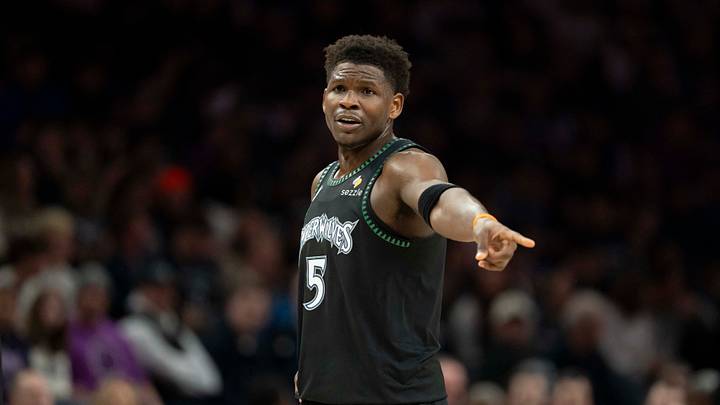
With LaMelo Ball and Jonathan Kuminga in the fold, the Minnesota Timberwolves are primed to play at a faster pace than in past years. Most people think of increased pace as a benefit solely in transition. The reality is that this change should also be evident in the half-court; most notably, the Wolves need to make quicker decisions with the ball.
Last season, the offense heavily centered around isolation, which naturally lends itself to slower, dragged-out possessions. In fact, the Wolves ranked fourth in isolation possessions and 10th in average possession time. There are advantages to playing slower, and with Anthony Edwards, you'll always have a steady diet of isolation play.
The Timberwolves would benefit from making quicker decisions in the half-court
Still, the Wolves went too far in this direction last season, and at times it made their offense too predictable. A big part of the problem was that Julius Randle's game is built around isolation. He operates methodically and is known for his bully ball style of play. It was great when he was attacking mismatches and playing against smaller teams.
Unfortunately, this style of play made him struggle against top-end defenses like the San Antonio Spurs and Oklahoma City Thunder. When there aren't mismatches for Randle to attack, and when defenses force him to make quick decisions by sending help at him, he struggles. It's no coincidence that he averaged more turnovers than assists against both the Spurs and Thunder in the last two playoffs.
Couple that with the Timberwolves not having a natural point guard, and this inability to make quick decisions in the half-court was a clear problem.
Thankfully, this is a problem that Ball provides an ideal solution to. Of course, LaMelo is a splendid playmaker, which will elevate everyone on the team. He also makes decisions with the ball incredibly quickly. As such, the ball will be zipping around throughout the game, and the Wolves' offense will be less predictable.
The best offenses keep opposing defenses on their toes and are unpredictable. That's not always, or even often, coupled with a fast pace, as some teams run intricate actions. Still, playing fast is a weapon, and every team needs to make quick decisions when they have the ball.
My favorite example of this working out is the 2025 Indiana Pacers. With the Wolves' plethora of creation threats, an elite playmaker, and a ton of athleticism, they are well-suited for this style of play. Plus, Chris Finch's free-flowing offensive vision lends itself well to rapid decision-making. There's simply no reason for Minnesota not to speed things up in the half-court.
Amid all the talk about the Timberwolves increasing their transition frequency and, more generally, playing faster, making quicker decisions in the half-court is an equally important piece of the puzzle. When it's all said and done, this style of play could help the Timberwolves reach their offensive ceiling.
 Add us as a preferred source on Google