

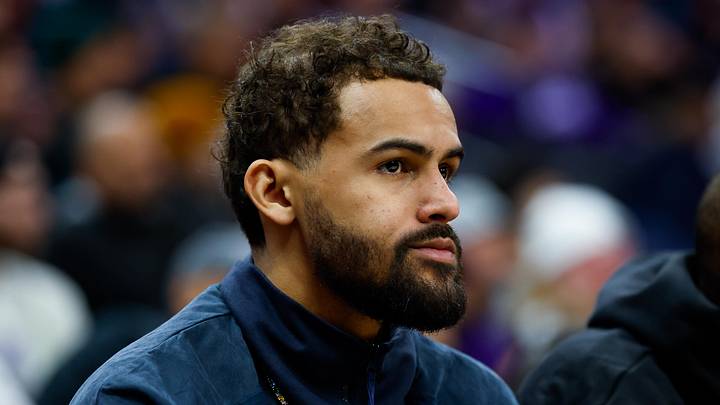
The Minnesota Timberwolves are looking for a second star this summer, but there was a chance they could have already had that accomplished if they had dealt for Trae Young at last year’s trade deadline.
The four-time All-Star was reportedly interested in coming to Minnesota last February, but it was more of him pursuing the Wolves than the other way around before he was traded from the Atlanta Hawks to the Washington Wizards.
The cost of the deal, which sent CJ McCollum and Corey Kispert to Atlanta, seemed like something the Wolves could have pulled off. But the true cost was revealed when ESPN’s Shams Charania reported that he agreed to a four-year, $212 million contract after opting out of his initial contract last week.
With a large financial investment sunk into Young, the true cost of making such a trade was revealed and may give the Wolves validation as to why they didn’t pull the trigger.
Trae Young’s star power didn’t mean he was a great fit for the Timberwolves
Young could have been a player who took pressure off Anthony Edwards in the playoffs. While he only played in 15 games last season, Young has averaged 25.1 points per game and 9.8 assists during his eight-year career and would have given Minnesota another offensive threat on the perimeter.
But for all the bright lights that are attached to Young, his weaknesses are apparent. Young needs the ball in his hands to succeed and while he may have taken those duties from Edwards, the Wolves need a different type of point guard.
A player who can facilitate and has a pass-first mentality to get other players involved, like Derrick White of the Boston Celtics, should be one of Minnesota’s top needs heading into the offseason. And it makes sense why Minnesota didn’t pick up the phone when Young’s camp called last February.
Young would have also been another inefficient cog in an offense that slogged through last season. While Julius Randle had trouble getting going, Young is a similar player, averaging 4.2 turnovers per game and 4.4 turnovers per 36 minutes over his career.
Poor decision-making, a lack of movement without the ball and a weak playoff record were all reasons for the Timberwolves to say no. Then the Wizards decided to drive the point home when Young declined his $49 million player option last week. While $53 million is a marginal increase, it also would have prevented the Wolves from pursuing many of their offseason targets while keeping their current core of Edwards, Jaden McDaniels, Naz Reid and Joan Beringer together.
It also would have never seen Ayo Dosunmu in a Timberwolves uniform, as a player the Wolves went onto acquire instead of Young at the trade deadline and leave Minnesota in an even bigger mess as they have been speculated to shop Rudy Gobert and Randle.
In the end, turning down Young proved to be the correct decision and the Wolves can only laugh as the Wizards invested in him for the long-term on Monday.
 Add us as a preferred source on Google