

The Minnesota Timberwolves threw everyone a curveball last week when Marc Lore sold his majority ownership share of the team to businessman Marc Stad. The $4.5 billion valuation shows how much the franchise has grown since he and Alex Rodriguez agreed to buy it for $1.5 billion in 2021. But it raised plenty of questions about the future of the team, especially considering how much Stad is willing to spend on the roster.
It didn’t take long for Stad to be tested as the Timberwolves pursued Jonathan Kuminga in free agency and the potential of a luxury tax bill that came with it. But according to The Athletic’s Jon Krawczynski, Stad gave president of basketball operations Tim Connelly “the green light” to do green light to do whatever it took to reach the $6 million taxpayer mid-level exception and finalize the deal.
Since Kuminga hard caps them above the second apron, there's a strong chance the Timberwolves waive and stretch Josh Green to make this signing official. Doing so would put $4.9 million of dead money on their books for the next three years; that's not a risk every owner would be okay with taking. It's clear that Stad is okay with this and that his priority is building a winning team, though.
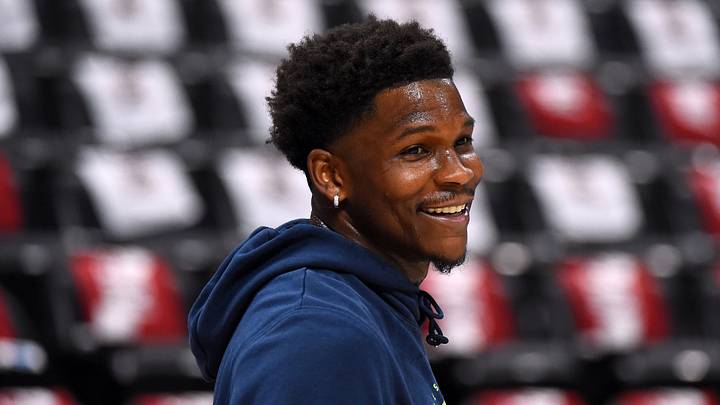
Stad’s approval gave Anthony Edwards the power to make a full-blown recruiting pitch to sign Kuminga, and it should give Wolves fans some peace of mind that the new owner may not handcuff Minnesota’s plans on and off the court.
The Timberwolves luxury tax bill puts Marc Stad to the real test
When it comes to the Kuminga deal, the biggest concern for Wolves fans is the luxury tax. While they will have to get below the second apron after using the mid-level exception to sign Kuminga, they will surely remain above the first apron and luxury tax.
While it doesn’t seem like much since Edwards ($48.9 million), Ball ($40.7 million) and Rudy Gobert ($36.5 million) are already on the team, it was a big talking point at the beginning of the offseason when the Timberwolves salary-dumped Julius Randle to the Brooklyn Nets.
Although Stad was part of the ownership group as a minority owner, it was no guarantee that he’d be willing to foot the bill for this season and some of the important contracts coming in the next few years, This includes a potential supermax extension for Edwards that could be worth up to $345 million in the summer of 2027 and an extension for Tim Connelly, who is entering the final year of his contract – albeit with a hefty bonus – at the end of it.
With that in mind, green-lighting $6 million for this year’s payroll doesn’t seem like a large investment. But Stad could be tested even further down the road.
New Timberwolves owner faces a much bigger test than the luxury tax
The rapid overhaul of the Timberwolves’ structure creates some longevity concerns as Stad takes over. But so does the potential for a new arena to replace Target Center. According to KSTP, Target Center’s lease runs through the 2034-35 season, which gives them time to figure out a deal.
Krawczynski added that Stad and the rest of the ownership group are “fully on board” with keeping the Wolves and the WNBA’s Minnesota Lynx in Minnesota with an arena and entertainment district that could be built in downtown Minneapolis.
This could all be happening as the luxury tax bill continues to grow, as the current players on the roster become more expensive, and the WNBA continues to grow, presenting higher costs for players and other infrastructure for the Lynx.
If Stad keeps footing the bill, it should quiet some of any concerns about this ownership shift. Signing off on the Kuminga deal and the possible dead cap ramifications is a solid first step, though.
 Add us as a preferred source on Google