

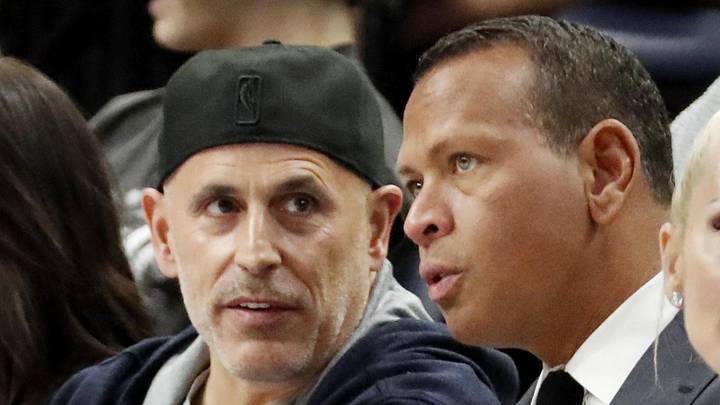
The Minnesota Timberwolves are still in a honeymoon phase when it comes to new owners Alex Rodriguez and Marc Lore. But they may be coming out of it after a salary-dump trade that sent Julius Randle to the Brooklyn Nets this week.
While there are benefits to that move, The Athletic’s Jon Krawczynski raised concerns by noting that “money was a factor.” President of basketball operations Tim Connelly fanned the flames on Tuesday night noting he needed to watch the team’s finances as they head into free agency.
“It’s about winning. If the moves can exponentially increase our chance to win at the highest level, then we’re all in,” Connelly said via Timberwolves podcaster Dane Moore. “We can’t be irresponsible fiscally. We can’t ignore the real realities and the increasing punishment as you get deeper and deeper into the tax. But we’re here to win. We’re here to try to get over the hump.”
While Connelly emphasized that winning is the ultimate goal, he continued to hint that Lore and Rodriguez have tightened the purse strings and are perhaps playing an unwanted role as they enter free agency
“So much is going to be cost-dependent, right?” Connelly said via Wolves beat reporter Travis Singleton. “We don’t have an endless amount of resources to add, but we do have some flexibility. We’re not allowed to contact these guys yet. We look at our roster as we enter free agency, there’s going to be some certain big holes and how do we address them? But much like the draft, we’re often times best player available and the market is going to dictate what we can or can not do.”
Timberwolves’ financial restrictions could wreck Tim Connelly’s offseason plans
Connelly has a lot riding on this offseason after how his tenure with the Timberwolves has played out. The decision to trade Karl-Anthony Towns has been highly criticized after Towns won a title with the New York Knicks and pressure is mounting to close the gap between the Wolves and the San Antonio Spurs and Oklahoma City Thunder.
The Randle trade helps in some ways as the Wolves shed $33.3 million in salary after the trade and used that money to re-sign Ayo Dosunmu, who was approaching free agency. The Wolves also have flexibility after the trade, including a $33.3 million trade exception and full mid-level exception.
But the Wolves may not use either of those tools due to their financial situation. The Timberwolves have been over the luxury tax in each of the past two seasons and the NBA has stiff penalties for being over the threshold in three out of four seasons. While it makes sense for the new ownership to avoid those penalties, it’s a hard sell to fans who just want to see their team improve.
The $33.3 million trade exception looks like a way to make an improvement, but it carries difficulties as the Wolves can not attach an outgoing player to a deal and would be hard-capped at the first salary apron per the collective bargaining agreement.
The mid-level exception that can be used in free agency is worth $15.05 million and opens the door to sign Collin Sexton, Coby White or Anfernee Simmons to address their needs in the backcourt. But that may not be used if their market explodes and the Wolves’ owners have tight restrictions in place.
The Wolves have the foundation of a playoff team with Anthony Edwards leading the way and Jaden McDaniels and Naz Reid trending toward bigger roles. But that may mean nothing if they can’t add a ball-handling point guard and some depth on the bench to help them get deeper into the playoffs.
Should the Wolves continue to prioritize saving money, it could be an extremely disappointing season and one that could make fans question the long-term future of the franchise.
 Add us as a preferred source on Google