

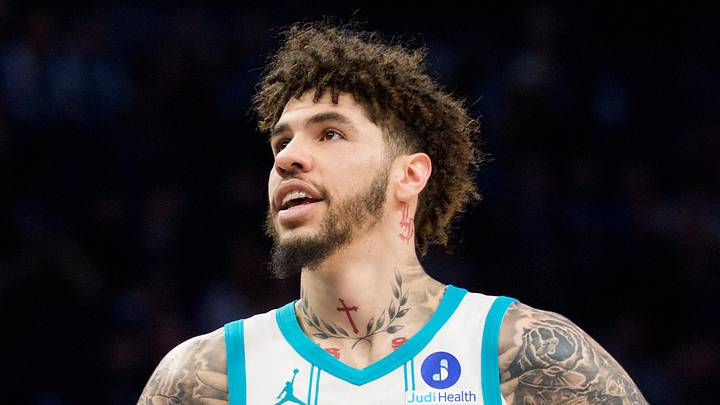
The Minnesota Timberwolves pulled off a major blockbuster trade by shipping out Naz Reid, a 2033 first-round pick, three first-round pick swaps and three second-round picks to the Charlotte Hornets for LaMelo Ball and Josh Green. Now, after this trade, some people were skeptical of the draft capital involved.
However, I'd argue that this perspective loses sight of the bigger picture. The Wolves traded a high-end sixth man (or solid starter) for an All-Star-level player at a position of need. Of course, some picks have to be included! The 2033 first-round pick was a given, but adding the pick swaps was necessary since the Wolves didn't have any other outright firsts to trade and they were trading Reid instead of Rudy Gobert.
Just as importantly, the Wolves' pick swaps don't project to be all that valuable. In fact, the 2029 and 2030 pick swaps were already involved in other swaps. Charlotte is getting the least favorable pick from several teams in 2030 and ditto for 2029 unless Minnesota lands a top-five pick. Thus, the likelihood of this move backfiring for Minnesota is limited.
Given this context, it's fair to look at this trade as moving a top-tier sixth man, one future unprotected pick (could be valuable), a pick swap in two years (the Wolves should be better than the Hornets), and three second-round picks for an All-Star level guard (which is something the Wolves clearly needed). With all due respect, that's highway robbery.
Why the LaMelo Ball trade doesn't carry that much risk for the Timberwolves
Anthony Edwards and Ball are entering their true primes as they turn 25 this summer. The Wolves have enjoyed a considerable amount of success in recent years and they are positioned to continue doing so with this core.
Listen, there's no such thing as a risk-free move and things could go sideways, especially with the new lottery odds. Regardless, the chances of these picks returning value to Charlotte are limited (outside of the distant 2033 pick).
Ball could prove to be the final piece to Minnesota's championship dreams. There wasn't a better upside swing available that fills the Wolves' needs to the degree Ball does.
Given the immense reward, it's worth the risk that things go south with the 2028 pick swap and the unprotected 2033 pick.
When I first heard about the Ball trade rumors, I didn't even factor in the Wolves' possible pick swaps. Instead, I thought they would have to center a deal around Rudy and likely sacrifice some of their young talent to make up for their lack of draft capital.
Was that naive of me in hindsight? Sure, but that shows that I don't view pick swaps as that valuable of assets if they are coming from a competitive team.
Frankly, pulling off a trade like this without giving up a ton of young assets is a masterclass for Tim Connelly and the Timberwolves.
You were never going to get a star by giving up nothing and while LaMelo has some concerns, it's hard to argue with the price. Ultimately, three pick swaps are alarming at first glance, but when you look at the context behind these swaps, it's hard to argue that this is a bad move for Minnesota.
 Add us as a preferred source on Google