

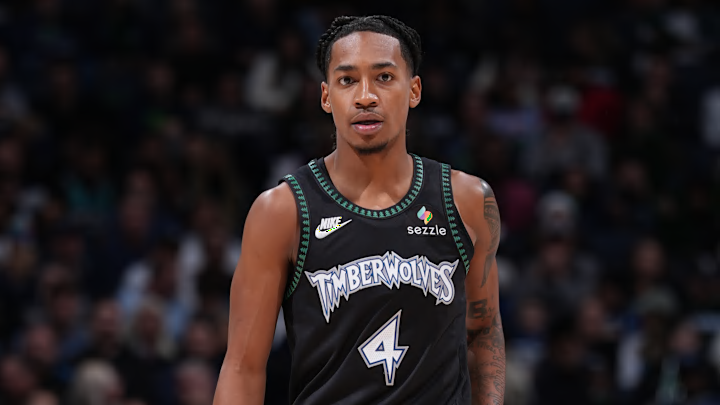
In the Minnesota Timberwolves' last two games, Bones Hyland has played 36 and 34 minutes respectively, while Rob Dillingham has only gotten on the floor for 12 and 11 minutes in those same contests. It's becoming abundantly clear that the coaching staff believes Rob Dillingham still has some growing to do before he becomes a full-time staple in the rotation.
This becomes clear when you consider how similar Hyland and Dillingham's archetype are. Both are young, mostly unproven scoring guards who like to push the tempo and exhibit a lot of quickness off the dribble. There is certainly still a path for Rob to become a meaningful contributor on this team, but it appears Chris Finch and his staff still want to see more from him before they elevate him above Bones.
What Minnesota is really signaling here is that trust still has to be earned, especially on a team with legitimate postseason expectations. The Timberwolves are not in a place where they can prioritize development. After consecutive deep playoff pushes, the primary question is about who can help them win games here and now.
Hyland has earned more confidence from Finch because he understands how to operate within that framework. He spaces the floor, keeps the offense moving, and generally avoids the kinds of mistakes that swing momentum. His shot selection is not perfect, but it is predictable, and predictability matters for a team that wants to play a certain way through their best player.
The Timberwolves are rolling with Hyland over Dillingham right now
For Dillingham, the challenge is less about scoring talent and more about consistency. The flashes are obvious. His speed, creativity, and shot-making upside are real. But Minnesota has been cautious with guards who can be targeted defensively, and that is where Rob still has work to do. Finch has repeatedly emphasized ball pressure and positional awareness, especially when sharing the floor with second units that lack size.
There's also the reality of Minnesota’s roster construction. With Edwards handling a massive offensive load and the Wolves leaning heavily on half-court execution, backup guards are asked to complement rather than command. Hyland has shown he can toggle between scoring bursts and connective play, while Dillingham is still learning that balance.
None of this should be read as an indictment on Rob’s future. If anything, it's a clear message that the Wolves believe in his long-term upside, but they're not going to shortcut the process. Minutes are currency on a contender, and Finch has often been the kind of coach to prioritize experience, for better or for worse.
If Dillingham sharpens his defensive engagement and shows more comfort operating without dominating the ball, his role is likely to grow. Until then, Minnesota is telling him something important, even if it stings: talent gets you noticed, but reliability gets you on the floor more consistently.
 Add us as a preferred source on Google