

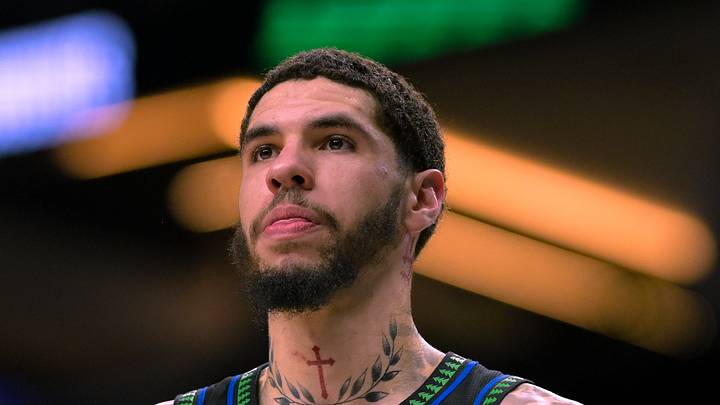
Jaden McDaniels has a reputation for speaking his mind. The Denver Nuggets certainly heard the Minnesota Timberwolves forward's thoughts during the opening round of the playoffs, when he called out nearly every key player on Denver’s roster as a bad defender.
After Saturday night's win over the Memphis Grizzlies, the 26-year-old essentially called out the Charlotte Hornets while praising his new teammate, LaMelo Ball, for his defense so far this season.
“He’s doing a good job. He’s pressuring people, running people off their spot,” McDaniels said. “I think it’s the effort and energy he gives. It’s way better than the Melo we played against…I think in Charlotte he didn’t really have to play defense, but here he has to.”
McDaniels’ comments highlight why so many doubted that bringing in Ball was the right decision when the trade with the Hornets was first made.
Narrative surrounding LaMelo Ball’s defense hasn’t shown itself
Spending his first six NBA seasons with the Hornets, Ball wasn’t exactly known for his defensive intensity. In fact, most saw him as an uninterested defender.
Now, he's joining a Timberwolves team that has prided itself on its defensive work. The fit wasn’t clear because Ball had never truly asserted himself on that side of the ball. Through the Wolves' 12-5 start, though, he has exceeded everyone’s expectations.
For the second time in three games, Ball made a huge steal late. No, Saturday’s wasn’t quite as meaningful as the one against the Portland Trail Blazers that led to McDaniels’ game-winning layup. Still, Memphis built momentum by cutting into the deficit and trailed by nine with two minutes to go when Ball cleanly stripped Cedric Coward, leading to a lob to McDaniels on the other end.
This year, Ball is pressuring opposing offenses like never before on the perimeter, and he’s never going to make it easy for them due to his long 6-foot-7 frame. The 2020 third overall pick is averaging a career-best 2.2 steals per 36 minutes, and he’s doing it within the structure of the defense, not by gambling for swipes.
With Charlotte, Ball made the offense much better when he was on the floor. Defense was a different story, as his effort wavered. His Cleaning the Glass page is filled with blue on the defensive end over his first six seasons (meaning the Hornets’ defense was worse when he played).
Now, in his first year with Minnesota, the team is giving up 11.9 fewer points per 100 possessions with Ball on the court, which is good for the 95th percentile. Being on a competitive team that prioritizes defense helps explain Ball's improved defense. Likewise, playing alongside Rudy Gobert also helps Ball play more aggressively.
Ball is a part of the Timberwolves ' league-wide best defense
Buying into Minnesota’s defensive culture, Ball is a big part of why the Timberwolves lead the NBA in defensive rating. He also played a major role in holding the Grizzlies to 95 points, and the surprising Memphis club entered the game second in offensive rating.
This isn’t a very small sample size either. The Wolves have now played more than one-fifth of their regular season schedule, and Ball has appeared in all 17 contests.
Sure, Ball has had some rough shooting nights. Sure, he’s had some games with too many turnovers or too many fouls. What Ball hasn’t had is many games where the defensive intensity wasn’t where it needed to be. To McDaniels' point, the Wolves' defensive culture is a big reason why.
 Add us as a preferred source on Google