

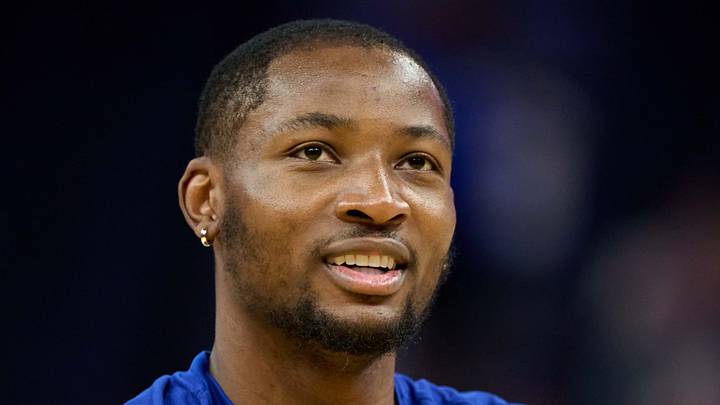
The Minnesota Timberwolves signed Jonathan Kuminga to fill their power forward void. They inked a two-year $12.4 million deal with Kuminga, which includes a player option after next season. Minnesota was linked to Kuminga since late July, and they beat out the Los Angeles Lakers, Chicago Bulls, and Portland Trail Blazers for the 23-year-old forward.
While the other teams are notable, the Lakers were the most commonly linked team to Kuminga, and he turned down a three-year deal worth $12 million a year to sign with Minnesota.
Kuminga chose the Timberwolves over offers from the Lakers, Bulls and Trail Blazers -- bypassing a similar starting role and $12M-plus annually over three years in L.A. to land in Minnesota for a shorter-term deal and an ability to have more control of his future, sources said. https://t.co/Nq9byvxkII
— Shams Charania (@ShamsCharania) August 26, 2026
As fringe contenders with open forward minutes, both the Wolves and Lakers were in a similar spot. The Lakers had more money to offer and thus were long viewed as the frontrunner. So why is signing with the Timberwolves a better choice for Kuminga? It all comes down to fit, and the fact that the Timberwolves' ideal fit could help Kuminga earn a bigger deal next summer.
With Jaden McDaniels and Trey Lyles being the Timberwolves' only two forwards, they had more opportunity for Kuminga. More importantly, though, the Timberwolves' fast-paced style of play suits Kuminga better.
The Timberwolves offer Jonathan Kuminga an ideal basketball situation
The Timberwolves committed to pushing the pace last season, ranking 10th in pace, a trend that's only primed to continue with LaMelo Ball. Conversely, the Lakers ranked 22nd in pace. Luka Doncic is a great playmaker, but he operates at a methodical pace, and with Walker Kessler in the mix, this slow pace will only continue.
It's more than fair to have questions about how this style of play would've fit Kuminga. Frankly, I don't think it would have maximized him.
Kuminga is a polarizing player, but he is undeniably a great athlete. The Timberwolves can maximize with their breakneck speed. Likewise, Ball can unlock Kuminga's upside as an athletic play-finisher. Just look at what Ball did for Miles Bridges.
Rudy Gobert and McDaniels also offer Kuminga some much-needed defensive support. Conversely, the Lakers' lack of defensive support for Kuminga would have made their fit less than ideal.
Furthermore, Chris Finch's offense empowers players and emphasizes free-flowing play. To this point, even if the Timberwolves are counting on Kuminga to be more of a play-finisher, he'll still have a chance to be himself at times. This balance is exactly what Kuminga needs to succeed.
In addition to their slower pace, Kuminga wouldn't be as clean a fit with the Lakers given their more methodical offense. Kuminga should be familiar with the risks of playing in a system that didn't fit his game after his time with the Golden State Warriors.
This is not to say that signing with the Lakers would have been as disastrous as his Warriors tenure. Regardless, the Timberwolves are a better all-around fit than the Lakers given their style of play and opportunity. As such, this gives Kuminga a better chance of playing a key role on a championship team.
When it's all said and done, prioritizing the Timberwolves' ideal fit over what the Lakers had to offer boosts Kuminga's chances of inking a lucrative long-term deal next summer.
 Add us as a preferred source on Google