

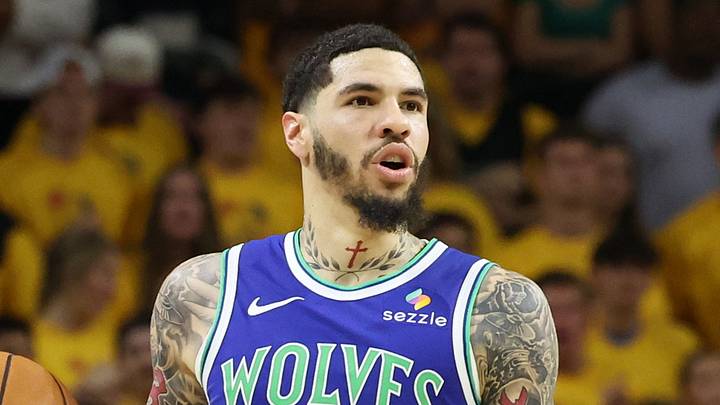
Many skeptics of the Minnesota Timberwolves' LaMelo Ball trade point to the fact that he's never played in the playoffs before as a major concern. This is somewhat fair, as the Wolves traded for Ball with a championship in mind.
However, I don't buy into the concerns about his shot selection and decision-making regarding his playoff viability. Sure, LaMelo has the tendency to occasionally make head-scratching plays, but this part of his game has improved. Plus, Ball's willingness to take daring 3-pointers unlocks opportunities for his teammates.
In general, I'm optimistic about Ball's outlook with the Timberwolves. He is a supremely talented offensive player who fits seamlessly alongside Anthony Edwards. To me, though, Ball's ability to adjust to the physicality of the playoffs is a real concern and a clear swing factor regarding his fit.
It's fair to wonder how LaMelo Ball will handle playoff physicality
The playoffs are a different monster than the regular season. Teams can zero in on you and focus on exposing your weaknesses. They can also get away with more contact. Guards who are slight of frame often struggle in the playoffs as a result.
Yes, Ball is 6-foot-7, but just he's 180 pounds, making him lighter than small guards such as Stephen Curry and Jalen Brunson. That's a concern in a playoff setting.
LaMelo has struggled to score around the rim throughout his career, never shooting above 60 percent at the rim. He's been able to generate an above-average amount of rim pressure in the regular season, but this might not be the case in a postseason setting.
If Ball struggles to both finish around the rim and to get to it, his all-around impact could be limited, since teams can get away with giving him no space to operate on the perimeter, and it would limit his drive-and-kick playmaking.
Ball could be talented enough to overcome a lack of functional strength. He is truly an elite playmaker and perimeter scorer. Still, I think it's fair to wonder how his lack of physical strength will fare in high-leverage situations. These concerns are particularly relevant given the high-pressure style of defense that the Oklahoma City Thunder and San Antonio Spurs play.
LaMelo's injury history also needs to be mentioned. He's only played more than 55 games twice in his six-year career. While last season was one of the healthiest of his career, Ball averaged just 28 minutes. In the playoffs, you need your best players to be on the floor more. But can Ball handle a heavy minute load while defenses are dialed in on giving him no space to operate? And of course, can he stay healthy for a deep playoff run?
Having acknowledged these concerns, I want to make it clear that I think trading for Ball is a worthy gamble for the Wolves. He is one of the 10 or so most talented offensive players, and he fills an undeniable need for the Wolves as a co-star and playmaker alongside Edwards.
When you have a chance to land a player like that at a fairly reasonable price, you make that move every time. Plus, I think his playmaking will help the Wolves' offense level up.
However, there's no denying that there's some level of risk attached to LaMelo, and chief among these risks is how he will adjust to the physicality of the playoffs.
The Ball-Timberwolves era will be defined by postseason success. As such, one of the biggest looming questions is how he will adjust to playoff physicality.
 Add us as a preferred source on Google