

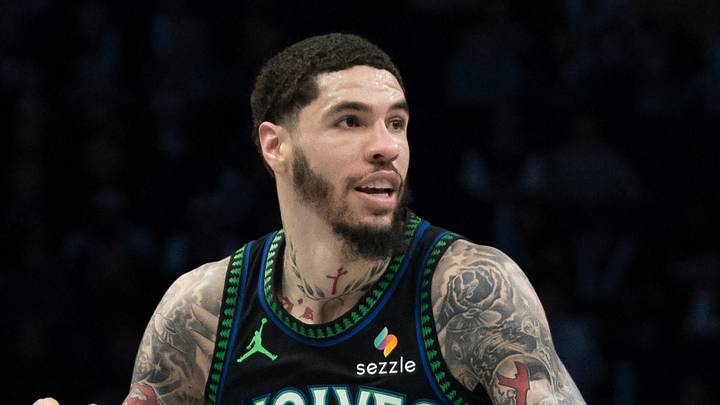
The Minnesota Timberwolves have been rolling without Anthony Edwards. They are 5-2 in the seven games since Edwards' injury and are riding a four-game win streak into Thursday's game against the Dallas Mavericks. And a big reason behind their success has been LaMelo Ball's play. During the Wolves' four-game win streak, Ball is averaging 25 points, 5.5 assists, and 3.3 rebounds on 52.2/44.7/86.7 shooting splits.
Simply put, he's been scaling up and handling first-option duties nicely. However, this hasn't been the case for the entirety of the seven games without Edwards. In the first three games of Ant's absence, Ball struggled with this adjustment, averaging 14 points, 6.3 assists, and 5 rebounds on 35/30.8/100 shooting splits.
Needless to say, the version of Ball in the past four games is more ideal than what he produced in the first three. The results support this idea. LaMelo's aggression has been the biggest story. In addition to the stat shifts, he's upped his field goal attempts from 13.3 to 16.8.
Earlier on, Ball was too focused on playmaking and wasn't taking over the game with his superb shotmaking. As we've established, though, his increased aggression has paid off.
An aggressive LaMelo Ball has sparked the Timberwolves' recent success
It's not exactly surprising to say that LaMelo's play correlates with the Timberwolves' success. But it's a bit jarring to look at exactly how much his play translates to the team's success. In wins, Ball is averaging 21.5 points with 48.4/43.6/81.8 shooting splits. Conversely, in losses, he is averaging just 9.7 points with 31.3/16.7/75 shooting splits.
As noted, being aggressive and looking for his own shots is a key factor. Yes, the Wolves traded for him because of his playmaking, but his ability to create shots for himself and provide All-Star-level scoring are also factors. He is one of the league's best difficult shotmakers, and without Ant, the Wolves need this skill set more than ever. Fortunately, the Wolves have gotten to see this version of Ball more as of late.
Given this and the strong correlation between Ball's good games and the team's success, it's safe to say the blueprint for Minnesota having success without Edwards is an aggressive LaMelo.
Another factor for Ball has been staying out of foul trouble and being cleaner on his defensive rotations. In losses, LaMelo is averaging five fouls. When he gets into foul trouble, he can't find offensive rhythm. The San Antonio Spurs game is the prime example of this.
Teams will constantly test Ball's physicality. This makes sense, as he is slight of frame, and it's a logical way to limit him as a 3-point shooter. Edwards' injury makes it easier to test LaMelo's physicality. The Spurs and Golden State Warriors had success with this strategy.
Thankfully, Ball has shown more success against this style of defense. Sure, part of it is his ability to hit contested 3-pointers. Just as importantly, LaMelo has done a much better job handling ball pressure. He has consistently beaten the pressure and is getting to the rim more often.
In the first three games without Ant, Ball averaged just 2.3 shots within five feet of the hoop, and he converted on just 42.9 percent of these looks. Encouragingly, these numbers are up to 3.8 attempts and 80 percent. This has helped Ball diversify his offensive attack and be more aggressive as a scorer. LaMelo has also had success against good defenses, most notably the Houston Rockets last week.
If Ball keeps up his aggression and scoring prowess, then the Timberwolves will continue to have success without Edwards.
 Add us as a preferred source on Google