

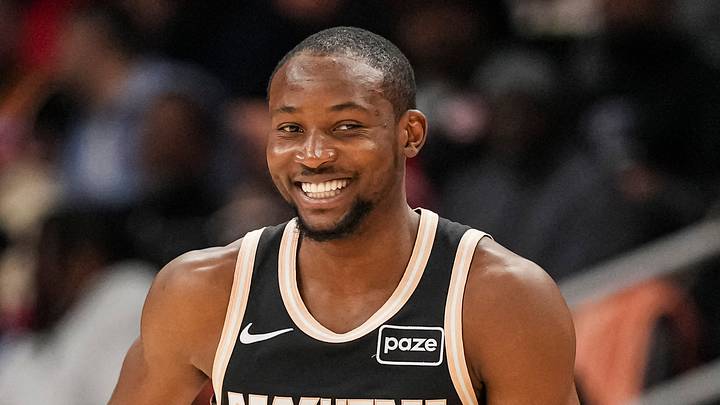
Defense was the main reason that Jonathan Kuminga decided to join the Minnesota Timberwolves. This bodes well for his ability to buy into a complementary role. Likewise, with the Timberwolves, we could see the actualized version of Kuminga on defense.
Thus far, Kuminga has proven to be a sturdy defender against opposing forwards and a high-level rebounder. Notably, Kuminga ranked in the 85th percentile for matchup difficulty per Basketball Index and the 94th percentile for defensive rebounding percentage per Databallr. This fills a major void for the Timberwolves, as before they've lacked a defender against forwards, and rebounding was a major concern.
Still, Kuminga's off-ball defense and engagement could improve. He doesn't impact the game much as a defensive playmaker and is susceptible to getting burned off the ball. Thankfully, playing alongside Jaden McDaniels and Rudy Gobert should help Kuminga. An elite point-of-attack defender and rim protector is a luxury that few teams offer, and this should help Kuminga level up on defense.
If Kuminga can build off the flashes of brilliance that he's shown as an on-ball defender while improving off the ball, then he'll be a borderline elite defender. Further unlocking this side of his game could help Kuminga truly transform how he's perceived and ensure the Timberwolves have a top-10 defense.
Jonathan Kuminga can unlock his defensive upside with the Timberwolves
While Kuminga's primary role will be guarding opposing forwards, the Timberwolves can bring more out of his off-ball defense and versatility. Minnesota's culture is non-negotiable: you need to defend to be on the floor.
Again, Kuminga has generally been a good defender, especially on the ball, but the Timberwolves can help him level off off the ball through their culture and the defensive talent around him. Gobert's elite rim protection should also make Kuminga feel more comfortable gambling in passing lanes, and in turn, we should see him make a stronger impact as a defensive playmaker.
Last season, Kuminga ranked in the 29th percentile for steals per 100 possessions and the 41st percentile for blocks per 100 possessions. These numbers are fine, but Kuminga is a 6-foot-7 forward with a ton of length and athleticism; he can be so much more as a defensive playmaker. There's simply no reason why he can't be a highly disruptive off-ball defender and roamer.
For a Wolves team that will focus on getting out in transition, Kuminga forcing more turnovers would be highly beneficial. Hopefully, this ideal basketball situation will optimize this side of his game.
I also wouldn't be shocked if we see more of Kuminga's defensive versatility, something we saw a fair amount of with the Atlanta Hawks. Kuminga is strong enough to guard fives in a pinch and nimble enough to defend perimeter players. We saw him guard Karl-Anthony Towns in the playoffs, and per Basketball Index, he ranked in the 86th percentile for perimeter isolation defense last season. Furthermore, Kuminga ranked in the 90th percentile for defensive positional versatility.
Perhaps Kuminga is used as the Timberwolves' secondary point-of-attack defender when McDaniels is off the floor or to open up opportunities for him to be a roamer. Another fun wrinkle could be allowing Joan Beringer or maybe even Rudy Gobert to be an off-ball roamer as Kuminga guards fives. These are just options that the Wolves will have.
The Timberwolves offer Kuminga a fresh start and a chance to change the current narrative around him. And for all the talk about what this will look like on offense, the defensive side of the ball can't be overlooked. Frankly, reaching another gear on defense might be the main reason that Kuminga gets a lucrative contract next summer, and given everything that's around him, there's a strong chance he can do just that.
 Add us as a preferred source on Google