

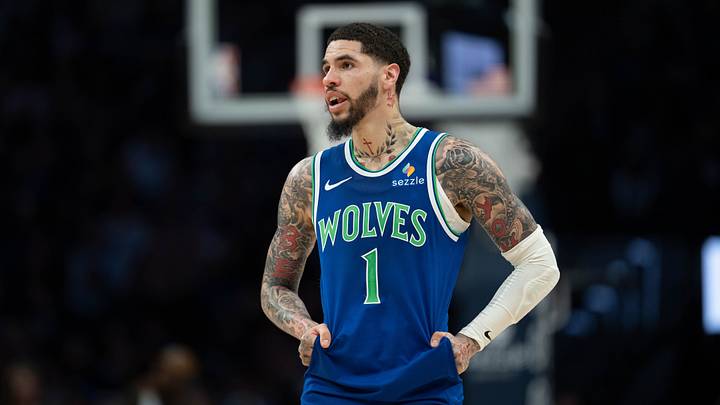
Through three games, the Minnesota Timberwolves look like a new team. The process began when they introduced a rebrand shortly after the 2025-26 season ended. It continued with a roster overhaul that brought LaMelo Ball and Jonathan Kuminga to pair with Anthony Edwards. A faster pace has also given the Wolves a breath of fresh air, and an undefeated start has fans feeling like Bill Walton during his freshman year at UCLA.
While fans may not be at the point of hearing colors and smelling sounds, this year’s team is giving them a bigger dopamine hit compared to last year’s team. But the biggest challenge for this year’s Wolves isn’t to get off to a fast start; it’s to make sure those good vibes continue when the honeymoon phase ends.
The Timberwolves’ new look is already fixing last season’s biggest problem
This was one of the biggest objectives for head coach Chris Finch and Tim Connelly heading into the season. The Wolves had a solid campaign a year ago, finishing 49-33 and making the playoffs for the fifth straight year. They also won a playoff series for the third straight season, reaching heights that Kevin Garnett was never able to ascend to, losing in the first round in seven consecutive seasons in the late-90s and early 2000s.
On paper, it should have felt like a good season. But the vibes made it feel much worse as the season went along.
The Wolves began last season feeling good, leaning on their continuity to help them get over the hump after back-to-back Western Conference Finals appearances. But despite going 15-8 in their first 23 games, there were issues that continued to get worse.
Julius Randle was a black hole on offense, and his mood got worse after he was floated in rumors for a potential trade for Giannis Antetokounmpo.
The Wolves also didn’t have a real point guard, leaning on Edwards as the primary ball handler with a supporting cast that left him vulnerable to double teams.
By the time the calendar flipped to March, the Wolves looked like a joyless team. Injuries to Donte DiVincenzo and Edwards during the playoffs left them in an even bigger hole, and it culminated in a 30-point loss at home to the San Antonio Spurs in Game 6 of the Western Conference Finals.
With that, the changes began. The rebrand was one step in the right direction, but it would have been lipstick on a pig if changes weren’t made to the roster. After agreeing to trade Randle to the Brooklyn Nets in what looked like a salary dump, the Wolves agreed to acquire Ball from the Charlotte Hornets in exchange for Naz Reid, a first-round pick, three second-round picks, and three pick swaps a few days later.
Finch described the move as “trading moodiness for giddiness,” and the team wasted no time capitalizing on the new vibes, organizing a trip to train with Gobert in Paris.
The changes have been evident through the first three games. The Wolves are tied for sixth in the NBA with 121.0 points per game and have the league’s highest 3-point percentage at 42.4 percent. Ball has also had a similar impact to shotgunning a Red Bull, averaging 16.0 points, 2.7 rebounds, and 6.3 assists per game.
Ball’s crossover and stepback 3-pointer in the third quarter of Sunday’s 117-94 win over the Toronto Raptors also sent a jolt of energy through the Target Center, almost as if fans couldn’t believe this is mostly the same team from a year ago with a few new pieces thrown into the mix.
It’s a great feeling for Wolves fans to have. But the bigger question is how long it will last.
The Timberwolves’ new chemistry will be tested when adversity strikes
The Wolves can celebrate their new look and attitude early in the season, but the NBA is a marathon, not a sprint. Much like an everyday person can get sick of seeing their co-workers every day, NBA players can experience the same thing, especially when the same 16 people are on the road for the majority of the next six to eight months.
This gets amplified when the team begins to lose. A player like Kuminga may be happy now, but if he’s not getting the shots he needs to rehabilitate his value to hit the market next summer, things could go south in a hurry.
A similar challenge could be if the Wolves run into bad health on the court. Edwards is already listed as questionable for Monday night’s game against the Cleveland Cavaliers as he deals with a balky right knee that limited him to 61 games last season. Ball also has an extensive injury history, while Gobert is in his age-34 season with no legitimate backup plan behind him, aside from 20-year-old Joan Beringer.
This may be viewed as a negative take, but there are highs and lows throughout the season that each team has to overcome to be competitive. In a loaded Western Conference, keeping the Wolves even-keeled is another challenge Finch will have to deal with, and it could be the difference between a rebound year or another season where fans lament what could have been.
 Add us as a preferred source on Google