

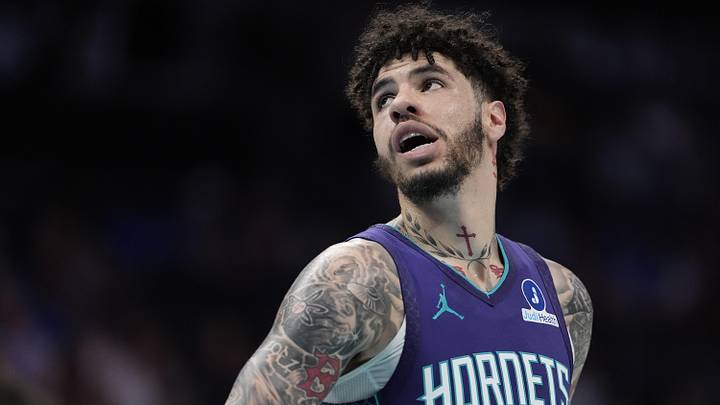
The Minnesota Timberwolves' blockbuster trade for LaMelo Ball sent shockwaves through the NBA world. In addition to Naz Reid, the Wolves traded a 2033 first-round pick, three first-round swaps and three second-round picks.
Minnesota already had limited future picks, but where do they stand now? Without any further ado, here's a breakdown of what picks the Wolves do have and where their other picks are going.
Incoming first-round picks
- 2028 (Least favorable of own/Charlotte)
- 2032 (Own frozen)
The Timberwolves traded their 2028 pick as a swap to Charlotte. This is the only pick swap they traded that wasn't involved in a previous swap (more on that later). As such, if the Wolves finish with a worse pick than Charlotte, they'll get to keep their original pick. Meaning this isn't a major risk for Minnesota.
On the other hand, while they do own their 2032 pick, it can't be moved for the next few years, since they were a second apron team in 2024-25.
Incoming second-round picks
- 2030 (Via Memphis picks 51-60)
The Wolves traded three of their four second-round picks to land Ball. Now, they only have a 2030 second-round pick, which will only convey if it falls between 51 and 60.
But where are all of the other picks headed?
Outgoing first-round picks
- 2027 (Memphis receives the most favorable of picks via Minnesota, Cleveland, or Utah, top-five protected. Second most favorable goes to Utah and least favorable goes to Phoenix.)
- 2029 (Two most favorable of picks via Utah, Cleveland, Minnesota (top-five protected) to Utah. Least favorable goes to Charlotte or Minnesota's top-five pick if they land in the top five.)
- 2030 (Charlotte gets the opportunity to swap with the least favorable of San Antonio/Dallas/Minnesota, unless Minnesota's pick ends up first overall.
- 2031 (To Sacramento unprotected)
- 2033 (To Charlotte unprotected)
I don't blame you if you are confused. Let's start off with the simpler side of things.
The Wolves' 2031 pick was traded for Rob Dillingham (ouch), but the Spurs later traded it for De'Aaron Fox, thus it goes to Sacramento. Furthermore, the Wolves traded their last possible unprotected pick (in 2033) to Charlotte for Ball.
Alright, now for the more complicated side of things, the Wolves' 2027 and 2029 picks were traded in the Rudy Gobert deal, while the 2030 pick was involved in the Dillingham deal.
In short, the 2030 pick that the Wolves traded in the LaMelo deal will likely be a very late first for Charlotte, given it's the worst of three different teams. Worst-case scenario, though, Minnesota can still get it back if they jump all the way to first.
The 2027 pick was part of the Gobert trade. However, the Jazz later used their swap rights in a deal with the Suns in 2025 and then this past deadline, they used it to trade for Jaren Jackson Jr. The Wolves will not receive a 2027 first-round pick, no matter what, though.
The 2029 pick is the most confusing. Here's a clear explanation from HoopsRumors: "The Timberwolves have already traded away their 2029 first-rounder with top-five protection, so Charlotte would presumably only be able to exercise the ’29 swap if Minnesota’s pick lands in the top five and the Wolves keep it."
What this means is that Charlotte will receive the least favorable first-round pick from either Utah, Cleveland, or Minnesota unless Minnesota lands within the top five. In this case, the Wolves and Hornets would swap picks.
Outgoing second-round picks
- 2027 (To Portland)
- 2028 (To Denver)
- 2029 (To Utah or Charlotte)
- 2030 (To Detroit if it doesn't land between 51-60)
- 2031 (To Detroit or Chicago)
- 2032 (To Charlotte)
- 2033 (To Charlotte)
The Wolves have also traded a majority of their second-round picks in various moves, including their 2032, 2033 and 2029 picks to Charlotte for LaMelo. Note this list doesn't include several of the picks involved in the Ayo Dosunmu trade since they were originally owned by other teams.
The LaMelo Ball trade emptied the Wolves' remaining draft assets
Long story short, trading for LaMelo was as close to an all-in move as possible for the Wolves from a draft capital standpoint. The hope is that Ball can help get the Wolves over the championship hump. He undoubtedly fills the need for more playmaking and creation alongside Anthony Edwards.
If things don't work out, though, the Wolves will have to pursue a trade that's purely centered around players.
Regardless, when looking at the context of the picks they gave up for Ball and that Reid was the only player going out, this is a great package to land an All-Star talent at a position of need.
 Add us as a preferred source on Google